

The High-Performing Team Model is a structured framework that defines the behaviours, conditions and drivers required to achieve sustained business performance and team effectiveness.
It provides a diagnostic lens and a common language for identifying performance gaps and building capability across teams.

How the model works
The model is introduced as both a diagnostic tool and a practical framework for improving how teams operate. It focuses on the 6 Drivers of High-Performance: culture, captaincy, communication, clarity, collaboration and connectedness.
Teams are guided through each driver to assess their current state, using a combination of structured questions, facilitated discussion and quantitative insight. This process establishes a clear baseline of performance, highlighting strengths and identifying areas where capability and alignment are limiting effectiveness.
Facilitated sessions then explore how each driver influences performance in real working conditions. Teams examine how leadership shapes direction, how communication affects execution, and how collaboration and connectedness enable or restrict delivery.
The model is applied directly to the team’s operational context, ensuring relevance and immediate application. Outputs are translated into defined actions, priorities and measurable success criteria, forming the foundation for targeted interventions within the High-Performance Pathway.
The Model Provides:
- A clear framework for understanding team performance
- Diagnostic insight across the 6 Drivers of High-Performance
- A shared language for discussing performance and effectiveness
- Identification of capability gaps and alignment issues
- Structured approach to improving team behaviours
- Alignment between leadership, teams and organisational objectives
- Foundation for targeted, outcome-driven interventions
Elements on the High-Performance Pathway are delivered as a structured, facilitated intervention:
Diagnostic in action
Observe how teams and leaders operate in real time, identifying behavioural patterns and performance gaps.
Insight
Introduce the 6 Drivers of High-Performance to create a shared language for understanding performance.
Intervention
Use experiential challenges to surface behaviours linked to performance outcomes.
Reflection
Facilitated discussion connects experience to workplace behaviour and performance.
Progression
Insights inform the other stages of the pathway, including team and leadership development and eventually team effectiveness.
Many team building activities focus on engagement without reflecting the realities of business performance. They create positive experiences but fail to translate into meaningful behavioural change.
This is different.
It is a structured, business-led simulation delivered as part of Team Building for Performance within the BlueSky Experiences High-Performance Pathway.
It sits alongside:
These elements collectively strengthen internal performance before progressing into Team Effectiveness, where outcomes are measured against business impact.
This is not an isolated activity. It is a performance intervention designed to reveal how teams operate in a commercial context and to provide diagnostic insight that informs targeted development.
The High-Performing Team Model enables organisations to move from activity-based working to outcome-driven performance.
- Improved clarity of roles, priorities and expectations
- Stronger leadership alignment and accountability
- Measurable improvement in communication effectiveness
- Increased collaboration and reduced operational friction
- Enhanced team cohesion and connectedness
- Clear uplift in team effectiveness indicators
- Evidence of capability growth across individuals and teams
All outcomes are defined against baseline measures, ensuring that progress is tracked and linked to business performance.es.
Problem: Lack of clarity on what drives team performance
Solution: Provide a structured model that defines the key drivers and how they influence outcomes.
Problem: Inconsistent leadership and direction
Solution: Strengthen captaincy through clear expectations, accountability and alignment.
Problem: Ineffective communication and collaboration
Solution: Diagnose breakdowns and implement targeted improvements across communication and teamwork.
Problem: Teams are performing but not effective
Solution: Shift focus from output to impact, aligning activity with meaningful outcomes.
Problem: Development lacks structure and measurement
Solution: Introduce a framework that supports diagnostic insight and measurable improvement.ance gaps that limit effective execution in real business environments. It targets the following challenges:
The model is designed to be embedded into daily operations, not treated as a one-off exercise. Sustainable improvement is achieved by continuously applying the framework to assess performance, guide decision-making and reinforce behaviours.
Through the High-Performance Pathway, insights generated from the model are translated into targeted interventions, leadership development and ongoing measurement. This ensures that improvements are maintained and adapted as the business evolves.
By embedding the 6 Drivers of High-Performance into how teams operate, organisations create a consistent, scalable approach to improving both performance and effectiveness.
What are the 6 Drivers of High-Performance?
Culture, captaincy, communication, clarity, collaboration and connectedness.
Is this a theoretical model or a practical tool?
It is a practical, applied framework used to diagnose performance and guide measurable improvement.
How is it measured?
Through a combination of quantitative surveys and qualitative insight, establishing a clear baseline and tracking progress over time.
Who is this suitable for?
Any team seeking to improve alignment, capability and effectiveness, from operational teams to senior leadership groups.
How does it link to other services?
It underpins all interventions within the High-Performance Pathway, ensuring consistency and measurable impact.


High-Performing Pathway
This activity is delivered as part of Team Building for Performance within the BlueSky Experiences High-Performance Pathway. It is designed to expose how teams operate under pressure, providing real-time insight into communication, collaboration, decision-making and leadership behaviours. Through structured facilitation, these behaviours are linked directly to the 6 Drivers of High-Performance, creating a shared understanding of what is enabling or limiting performance. The experience acts as a diagnostic in action, identifying performance gaps and establishing a clear foundation for targeted team and leadership development, ensuring that the activity contributes to measurable improvement in team effectiveness and business outcomes.
How This Delivers Performance Improvement
This activity directly activates the 6 Drivers of High-Performance:
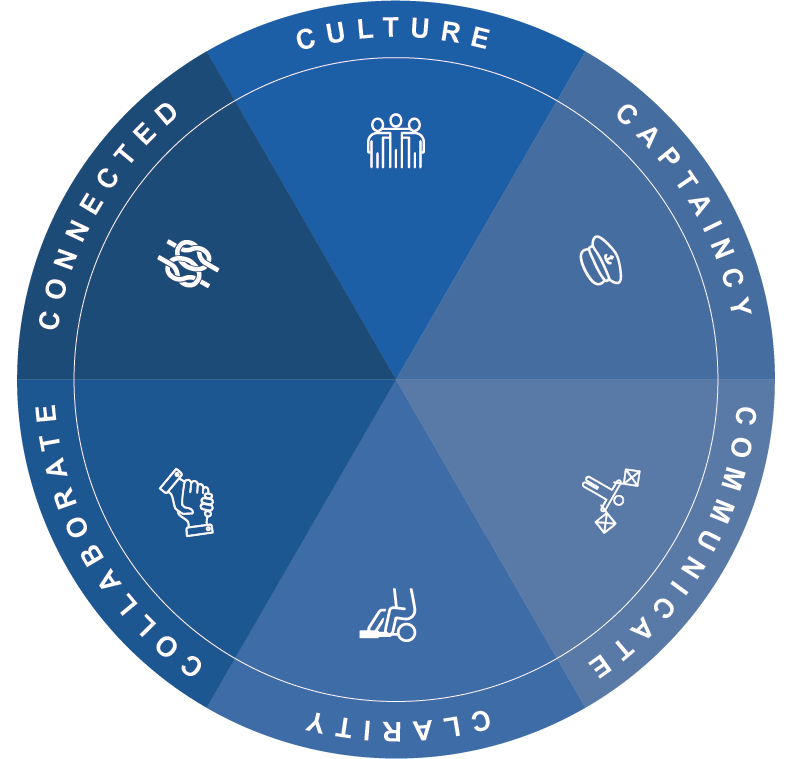
Culture
Teams experience the impact of behaviours on results, reinforcing accountability and ownership.
Captaincy
Leadership emerges through decision-making, prioritisation and direction under pressure.
Communication
Clear, timely communication becomes critical as teams manage competing demands.
Clarity
Teams must define strategy, allocate resources and understand objectives to succeed.
Collaboration
Success depends on coordinated effort, shared understanding and effective teamwork.
Connectedness
Teams experience how processes, decision flow and interdependencies affect outcomes.
This creates immediate, observable insight into how teams perform in a business context.
Implement the High-Performing Team Model today
Establish a clear, structured understanding of what drives your team’s performance and where improvement will deliver the greatest impact.
Engage with BlueSky Experiences to apply the High-Performing Team Model and build a pathway to measurable, sustained team effectiveness.
