
Strong activity, limited impact. Teams are busy, targets are being hit, yet something is not shifting in the way it should. That gap between effort and outcome is where most organisations begin to question whether their current approach to team development is actually working.
This is the context in which SSCL’s Team Building Strategy (TBS) sits. It is not designed as a series of isolated activities. It is structured to address how teams operate, how they align, and how they convert effort into meaningful business results.
The starting point is simple. Most teams do not fail because of a lack of effort. They struggle because of misalignment. Priorities compete, communication becomes inconsistent, and collaboration drifts into inefficiency. The result is visible performance, but limited effectiveness.
TBS tackles this by focusing on how teams function under pressure, not just how they behave when everything is controlled. It looks at the patterns that emerge when decisions need to be made quickly, when information is incomplete, and when individuals are required to rely on each other.
At its core, the approach recognises that performance is not just about output. It is about whether that output moves the organisation forward. That distinction matters. A team can deliver consistently and still fail to improve capability, strengthen relationships, or build resilience.
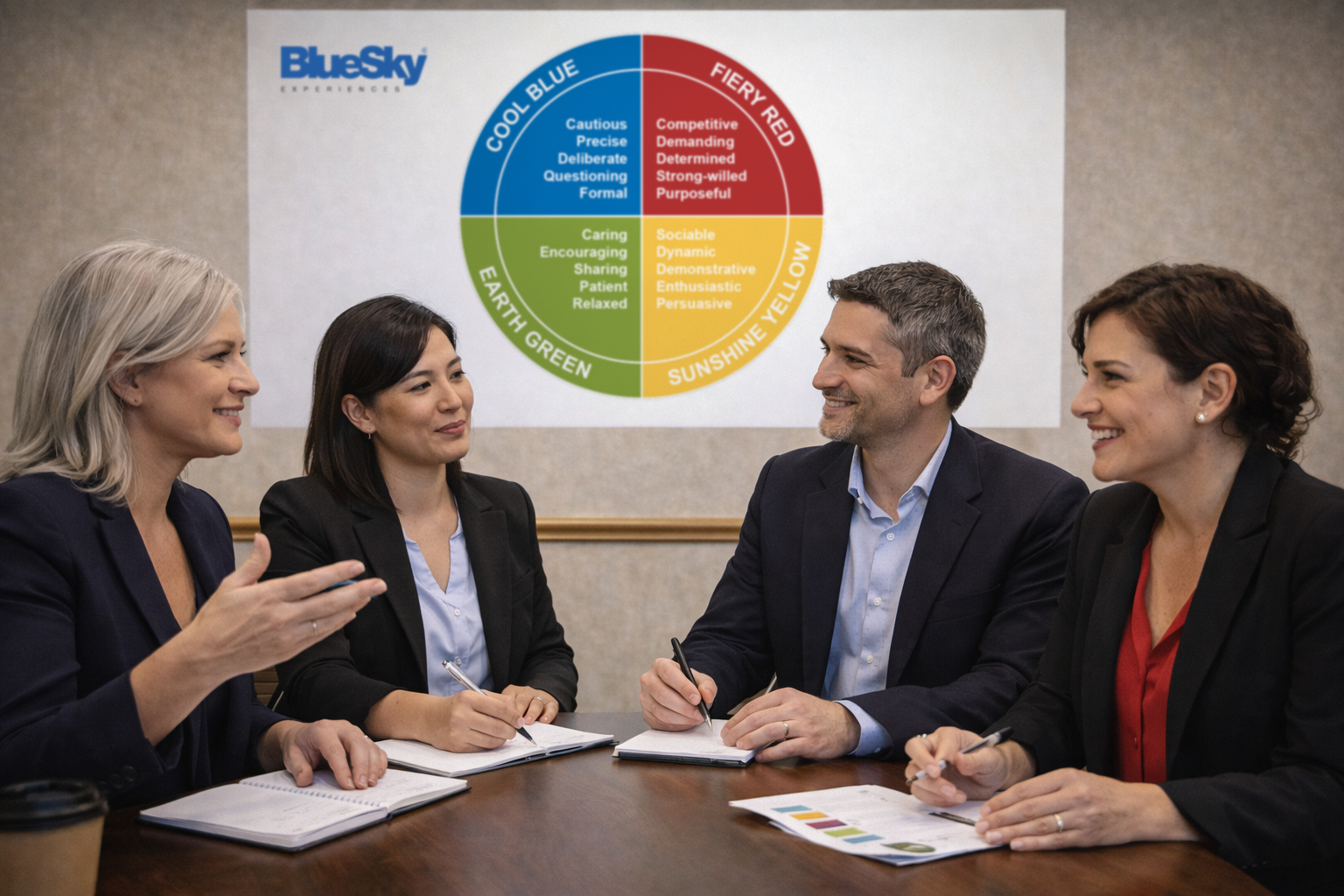
This is where structured team building becomes relevant. Not as an end in itself, but as a mechanism to surface behaviours, test assumptions, and create shared understanding. When designed correctly, it allows teams to see how they actually operate, rather than how they believe they operate.
A key feature of the TBS model is that it does not treat all teams the same. It assumes variation. Different teams face different pressures, operate in different contexts, and require different interventions. The role of the strategy is to provide a framework that can adapt to those differences while maintaining a consistent focus on outcomes.
That framework is built around several critical areas.
Clarity comes first. Without a shared understanding of objectives, teams default to activity. Work gets done, but not necessarily the right work. TBS reinforces the need for clear direction, defined success measures, and alignment between individual roles and organisational goals.
Communication follows. Not just the volume of communication, but its quality. Teams often communicate frequently but without purpose. Messages become diluted, priorities shift, and decision-making slows. The strategy emphasises structured, purposeful communication that supports execution.
Collaboration is then addressed. In many organisations, collaboration is assumed rather than designed. Teams work alongside each other, but not always with each other. TBS focuses on how collaboration actually happens, identifying where friction exists and where capability needs to be developed.
Leadership, or captaincy, sits at the centre. Teams reflect the behaviours of their leaders. Where leadership is inconsistent, teams become inconsistent. The strategy recognises that improving team performance often requires strengthening leadership capability, not just team dynamics.
Finally, there is connectedness. How the team fits within the wider organisation. A team can operate effectively in isolation and still fail to deliver impact if it is not aligned with stakeholders, customers, or other functions.
What differentiates this approach is the emphasis on measurement. Activity alone is not enough. Teams need to understand where they are starting from and how they are improving over time. Without that baseline, it is impossible to demonstrate return on investment or justify continued development.
This aligns directly with what senior decision-makers require. They are accountable for outcomes, not participation. They need to see evidence that development activity is translating into improved performance, stronger capability, and better business results.
TBS addresses this by linking every intervention back to a defined performance gap. It creates a clear line from diagnosis to action to outcome. That structure reduces risk. It moves team building away from perception as a “soft” intervention and positions it as a targeted, evidence-based approach to improving effectiveness.
There is also a practical benefit. By focusing on real behaviours in real scenarios, teams develop habits that transfer directly back into the workplace. The experience is not separate from the job. It is a reflection of it.
This is consistent with a broader shift in how organisations approach development. There is increasing recognition that isolated training sessions or one-off events rarely deliver sustained change. What is required is a structured pathway that builds capability over time, reinforces behaviours, and measures impact at each stage.
SSCL’s Team Building Strategy fits within that thinking. It provides a way to engage teams, surface issues, and create momentum, while still maintaining a clear focus on business performance.
The value is not in the activity itself. It is in what the activity reveals, how the team responds, and what changes as a result.
That is where the real return sits.
